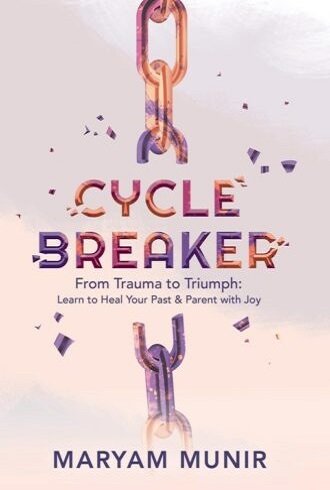
If you are looking for a parenting book that blends healing, faith, respectful parenting, and generational growth, Cycle Breaker by Maryam Munir might be the one that changes everything for you.
This was the very first parenting book I ever read. And it did not just inform me. It transformed me.
This post may contain affiliate links. As an Amazon Associate, I earn from qualifying purchases at no extra cost to you.
If you are ready to begin your own healing journey, you can find Cycle Breaker by Maryam Munir here.
Why I Almost Didn’t Buy Cycle Breaker
For most of my life, I avoided non-fiction. I found it dry and uninspiring. At the time, my first child was two years old and I was expecting my second. I kept hearing incredible reviews about Cycle Breaker, but I hesitated.
Eventually, I gave in.
And I am so grateful that I did.
How Cycle Breaker Helped Me Heal My Childhood
Reading this book was emotional in ways I did not expect.
I remember crying into my pillow. I remember grieving the parts of my childhood that felt lost. I remember feeling like something had been taken from me.
But this is what makes Cycle Breaker powerful.
It does not teach you to resent your parents. It teaches you to understand them.
Maryam Munir beautifully explains how our parents often did the best they could with the tools, knowledge, and emotional capacity available to them. That realisation allowed me to hold two truths at once:
- I can grieve what I did not receive.
- I can still honour and respect my parents.
That balance is rare in modern parenting conversations.
Respectful Parenting and the Prophetic Way
Before reading Cycle Breaker, I already believed in gentle parenting. But this book deepened my understanding and connected it to the Prophetic model of parenting.
One phrase that stayed with me was Respectful Parenting.
Something about that term filled my heart.
As a child, I had craved respect every single day. Reading this book helped me recognise that what I truly longed for was to be seen, heard, and valued.
Through this book, I learned about:
- Boundaries
- Validation
- Autonomy
- Belonging
- Emotional safety
- Breaking generational trauma
And I made a decision.
I would raise my children with respect.
And I would teach them to walk away from spaces where they are not respected.
The Vulnerability of Maryam Munir
One of the most powerful aspects of Cycle Breaker is the vulnerability Maryam shows. She openly shares her own journey and healing process. It was the first time I saw a Muslim parenting educator truly own her story without shame.
That honesty builds trust. And trust builds transformation.
Her words did not just stay on the page. They moved me to action.
From Reader to Trauma-Informed Parent Coach
After finishing Cycle Breaker, I enrolled in Anokhay Parents, alongside Nabila Haris.
Then I joined Anokhay Mentors.
And eventually, I applied for Anokhay Coaches.
I still remember receiving the acceptance call. I cried. I jumped. I could not believe it.
Today, I am training to become a trauma-informed parenting coach.
That is the ripple effect of one book.
Who Should Read Cycle Breaker?
This book is for you if:
- You want to break generational cycles
- You are exploring respectful or gentle parenting
- You want to integrate faith and parenting
- You are grieving parts of your childhood
- You want to parent with emotional intelligence
- You believe healing and parenting are connected
Final Thoughts: Is Cycle Breaker Worth It?
Yes.
If you are ready to grow, to heal, and to parent differently, Cycle Breaker is not just a book. It is a starting point.
You just need to take the first step.
You can order your copy of Cycle Breaker here.
Buy it. Read it slowly. Let it move you.
Because sometimes one book is enough to change the direction of your entire life.
You can explore more healing-centered books in my Parent Library.
Frequently Asked Questions About Cycle Breaker by Maryam Munir
Is Cycle Breaker suitable for new parents?
Absolutely. It is especially helpful for parents who want to break generational cycles early.
Does Cycle Breaker focus on trauma?
Yes. It helps parents recognise unresolved childhood wounds and parent from healing rather than hurt.