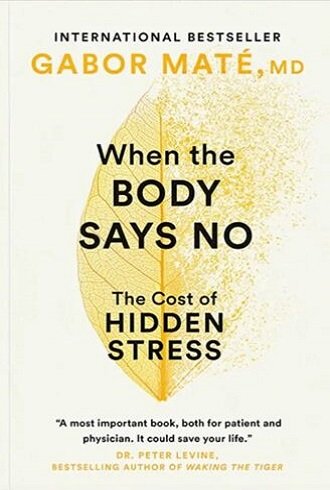
In 2025, I finally read When the Body Says No by Gabor Maté.
But my journey with this book began years earlier. I had watched his introduction long before I was ready to open it. In that introduction, Maté spoke about something both profound and unsettling: how the body eventually stops cooperating when we repeatedly override our emotional needs.
When we do not slow down.
When we suppress anger.
When we ignore stress.
When we continue performing strength while quietly collapsing inside.
I knew he was speaking to people like me. And that is exactly why I avoided the book for so long.
This post may contain affiliate links. As an Amazon Associate, I earn from qualifying purchases at no extra cost to you.
You can find When the Body Says No by Gabor Maté here
Why I Wasn’t Ready to Read About Trauma and the Body
At the time, I was living in survival mode. I was carrying unprocessed childhood trauma, had developed compulsive overworking behaviors, and equated productivity with worth. Slowing down felt unsafe.
The idea of reading about how trauma could contribute to chronic illness was terrifying. I did not want to imagine how my body might “give out” one day. So I waited, even though part of me knew this book would eventually find me.
When My Body Was Already Speaking Through Chronic Illness
By the time I finally bought the book, my body had already been speaking for years. I was living with:
- Asthma
- Irritable Bowel Syndrome (IBS)
- Migraines
- Functional gastritis
- Functional GERD
I had also been in therapy for a year. Something had shifted internally. I felt just courageous enough to explore the connection between trauma and chronic illness. So I opened the book.
Trauma and Chronic Illness: A Difficult but Necessary Read
When the Body Says No is not an easy book. Page after page presents real-life cases of individuals whose bodies developed cancer, autoimmune diseases, and chronic illnesses after years of emotional suppression and self-neglect.
It can feel heavy. Overwhelming at times. But just because it is heavy does not mean it is untrue. Gabor Maté explores connections between:
- Emotional repression and autoimmune disease
- People-pleasing personalities and chronic illness
- Childhood trauma and adult health conditions
- Stress and immune system dysregulation
- Suppressed anger and physical symptoms
As I read, I began recognizing patterns in myself. I saw behaviors I had normalized for years:
- Overworking to exhaustion
- Difficulty saying no
- Avoiding conflict
- Suppressing anger
- Ignoring physical symptoms
- Prioritizing others over myself
These patterns are common among trauma survivors. And according to Maté, they can have real physiological consequences over time. The book did not feel like an accusation. It felt like a mirror that was uncomfortable before it became clarifying.
How Trauma Showed Up in My Body
Reading this book helped me reflect deeply on my own life. I realized how my body had been signaling distress long before I consciously recognized it. Every migraine, IBS flare, and sleepless night told a story of unprocessed emotions, boundaries ignored, and needs unmet.
Maté’s work made me aware that these are not random symptoms; they are messages from the body, highlighting the importance of listening to emotional and physical cues.
The Mind–Body Connection and the Hope for Healing
What I appreciated most about When the Body Says No is that it does not end in despair. After presenting difficult truths about trauma and chronic illness, Maté offers a pathway toward healing.
He discusses ways to:
- Develop emotional awareness
- Reconnect with the body
- Learn to set healthy boundaries
- Cultivate authenticity
- Strengthen the nervous system
- Address stress at its root
Reading these sections, I realized that my therapy had already begun this work. I was slowly learning to listen to my body, to honor my needs, and to say no without guilt. Maté’s teachings encouraged me to adopt the remaining practices intentionally, creating a proactive approach to mind-body healing.
Why Gabor Maté’s Work on Trauma Matters
Gabor Maté is widely recognized for his work on trauma, addiction, stress, and the mind-body connection. His research is informed by decades of clinical experience and his own personal history.
His central message is clear and powerful: the body keeps the score of what the mind tries to suppress. Emotional repression, chronic stress, and unprocessed trauma can manifest physically, affecting immune function, hormonal balance, and overall health.
Whether or not you agree with every conclusion, his work opens a vital conversation about how we treat our emotions, our bodies, and ourselves.
Should You Read When the Body Says No?
This book may be valuable if you are interested in:
- The connection between trauma and chronic illness
- Emotional suppression and autoimmune disease
- People-pleasing personalities and chronic illness
- How stress impacts the immune system
- Healing childhood trauma
- Understanding psychosomatic illness
It is not light reading. It is not comforting in a traditional sense. But it is clarifying, emotional, and transformational.
You can get your copy of When the Body Says No by Gabor Maté here
Sometimes our symptoms are messages. And sometimes the first step toward healing is the courage to truly listen to what our body is saying.
You can explore more healing-centered books in my Parent Library.
Frequently Asked Questions About When the Body Says No by Gabor Maté
Is When the Body Says No based on a true story?
The book combines real-life case studies and research from Gabor Maté’s decades of clinical experience.
Does the book cover trauma and chronic illness?
Yes, it explores how emotional suppression, stress, and unprocessed trauma can lead to long-term health issues.
Can reading this book help me with healing?
Yes, it offers strategies for emotional awareness, boundary-setting, and reconnecting with the body to prevent or mitigate chronic illness.