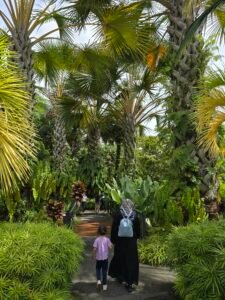

Today, I want to share my experience of raising multilingual children.When I moved to Switzerland in 2016, I spoke only Urdu and English. Marrying into a Dutch-Pakistani family meant adding another language and culture into our everyday life. When we became parents, I knew we were entering the world of multilingual parenting.
Around me, I noticed many children of Pakistani parents struggling to speak Urdu fluently. I did not want my children to feel disconnected from their heritage language. I wanted them to feel comfortable speaking it. I wanted it to feel natural.
That desire shaped how we approached raising multilingual children.Around me, I noticed many children of Pakistani parents struggling to speak Urdu fluently. I did not want my children to feel disconnected from their heritage language. I wanted them to feel comfortable speaking it. I wanted it to feel natural.
That desire shaped how we approached raising multilingual children.
Learning from a Multilingual Family
My husband grew up multilingual.
He learned:
- Urdu from his father
- Dutch from his mother
- English through school in Pakistan
- German simply by hearing it at home
There was no pressure. No structured lessons. No formal language plan.
And yet, it worked.
Watching that made me curious. What made multilingualism feel effortless in his childhood? The answer was simple. Exposure, consistency, and emotional safety.
Our Gentle Approach to Raising Multilingual Children
When I became a mother, I chose a gentle, connection-based approach.
There were:
- No language drills
- No correction in harsh tones
- No expectations to perform
- No pressure to “prove” fluency
I spoke to my daughter in Urdu and English. My mother-in-law spoke to her in Dutch. When she mixed languages, we responded in the correct one naturally, without shaming or interrupting her flow.
We focused on communication, not perfection.
Can Children Really Learn Multiple Languages Naturally?
Yes.
Children are incredibly capable of learning multiple languages when they feel safe and connected.
Today, our 4-year-old speaks:
- Urdu
- English
- Dutch
And she understands some German as well.
All of this happened without formal language classes or special programs.
Research shows that young children absorb languages best through consistent exposure and emotional security. Multilingual parenting does not have to feel overwhelming. It can feel organic.
Respectful Parenting and Language Development
What guided us were two principles:
- Respectful parenting
- Emotional connection
When children feel safe, they take risks. They experiment with words. They mix languages. They try again.
If we turn language into pressure, we risk turning it into resistance.
If we treat it as connection, it becomes belonging.
Raising Multilingual Children Without Pressure
If you are wondering how to raise multilingual children naturally, here are a few gentle reminders:
- Speak your heritage language confidently
- Do not panic if they mix languages
- Avoid correcting in a shaming way
- Focus on connection over perfection
- Trust consistency over intensity
Multilingual children do not need stress. They need exposure and warmth.
Final Thoughts on Multilingual Parenting
Parenthood does not have to be a battleground. It can be gentle, connected, and deeply meaningful.
Raising multilingual children is not about creating perfect speakers. It is about giving them access to culture, identity, and belonging.
With patience, respect, and emotional safety, multilingualism can unfold naturally.
And sometimes, the most powerful approach is the softest one.